
Most articles about packaging talk about products, materials, or shipping costs. But imagine following a single package from the moment it leaves a warehouse.
Before a customer ever sees it, that package will likely be lifted, stacked, wrapped, moved, unloaded, loaded again, and transported across cities or even states. It may sit in a distribution center. It may spend hours in the back of a trailer. It may have other products stacked on top of it.
The interesting thing is that none of those steps are unusual.
They happen every day.
The question becomes whether the packaging was designed for that reality.
At OEM Materials, the conversation often starts there. As a packaging supplier serving businesses throughout Southern California, the company helps customers think less about packaging products and more about everything those products must survive.
The First Challenge Is Usually the Warehouse
People often blame carriers when products arrive damaged.
In truth, many packaging failures begin long before transportation starts.
Warehouses are busy environments. Inventory is constantly moving. Forklift operators work quickly. Products are stacked to maximize storage space. Every touchpoint introduces risk.
This is why many operations focus heavily on pallet stability. Something as simple as applying stretch film correctly can dramatically improve how inventory performs during storage and handling.
A secure load is easier to move.
It is easier to store.
Most importantly, it is less likely to become damaged before shipping even begins.
The Long Ride to the Customer
Once products leave the building, a completely different set of challenges appears.
Road vibration. Sudden stops. Sharp turns. Multiple transfers between facilities.
Packaging must account for all of it.
Businesses that regularly ship products understand that transportation can expose weaknesses very quickly. A load that looked perfectly stable inside the warehouse may not remain that way after several hundred miles on the road.
For that reason, many companies rely on pallet wrap as part of their shipment preparation process. Proper containment helps products stay together as a single unit rather than behaving like dozens of individual items.
That difference matters more than most people realize.
Why Some Products Need Special Treatment
Not every shipment faces the same risks.
A pallet of flooring materials encounters different challenges than a rack of servers. Automotive components have different requirements than military equipment.
The packaging industry has evolved because products themselves have evolved.
Businesses increasingly need specialized solutions rather than generic protection.
That is one reason OEM Materials spends considerable time understanding what customers actually ship before recommending packaging systems.
Effective packaging starts with understanding the product.
Everything else comes afterward.
Protecting Technology Worth Thousands
A damaged server can create problems that extend well beyond the value of the equipment itself.
Installation schedules may be delayed. Projects can be pushed back. Customers may need replacement units shipped immediately.
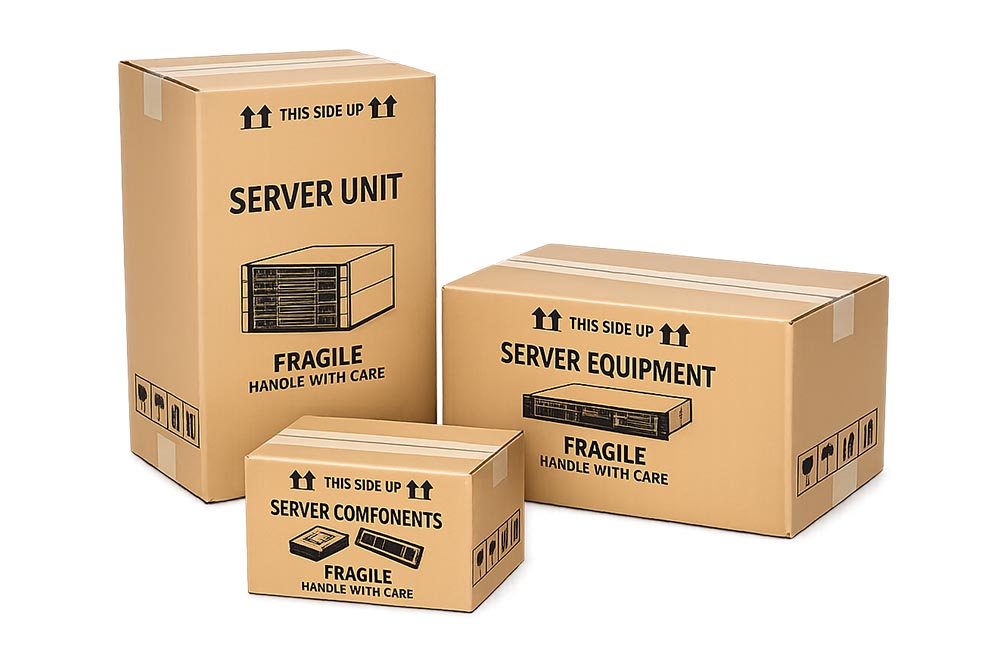
The packaging surrounding technology equipment must protect against impacts, vibration, and handling stress while supporting safe transportation through complex logistics networks.
The goal is simple.
When the box opens, the equipment should be ready to perform exactly as intended.
Automotive Parts Have No Time for Delays
Automotive manufacturing runs on precision.
Parts arrive when they are scheduled to arrive. Production lines move when components are available. Delays create costs.
Because of this, OEM Materials Automotive Packaging is often designed around reliability and consistency. The objective is to protect components from damage while supporting efficient movement through the supply chain.
A damaged automotive part may seem like a small issue.
In reality, it can create consequences that affect multiple operations.
Packaging helps prevent those disruptions before they begin.
Military Packaging Operates by Different Rules
Commercial shipments generally focus on speed and efficiency.
Military-related products often focus on readiness and durability.
Organizations utilizing OEM Material military packaging frequently require protection systems capable of handling demanding transportation environments and long-term storage conditions.
Products may spend significant time moving through logistics networks before reaching their final destination.
Protection cannot depend on ideal conditions.
It must perform consistently under a wide range of circumstances.
That requirement shapes every aspect of military packaging design.
The Flooring Industry’s Packaging Challenge
Many people assume flooring products are naturally durable.
They are not entirely wrong.
However, flooring products are also heavy, long, and particularly vulnerable to edge damage. Even small imperfections can affect customer satisfaction and installation quality.
Businesses using OEM Materials Flooring Packaging often focus on protecting appearance as much as structural integrity.
The product might technically survive transportation.
The question is whether it arrives looking the way customers expect.
Strong packaging helps ensure the answer remains yes.
Packaging Often Fails at the Corners
There is a reason warehouse managers pay close attention to corners and edges.
These areas typically experience the highest concentration of pressure during transportation and storage.
Loads are stacked. Weight accumulates. Packaging materials begin to weaken.
Many companies address this issue by incorporating edge protectors into their packaging programs. These reinforcements help strengthen vulnerable points and improve overall load durability.
The investment is modest.
The protection benefits can be significant.
Sometimes preventing damage comes down to reinforcing the right areas before problems occur.
Boxes Still Matter
Technology changes. Supply chains evolve.
Yet cardboard boxes continue to move products around the world every day.
There is a reason for that.
They are versatile, practical, and cost-effective.
When products require greater protection, businesses often move toward corrugated boxes because of their enhanced strength and durability. These containers provide additional resistance to impacts and compression while remaining efficient for transportation.
No matter how advanced a packaging strategy becomes, it still relies on a strong container as its foundation.
Good packaging begins with the basics.
The Space Nobody Thinks About
Open a package and what do you see?
Usually, you notice the product.
What you may not notice is the empty space around it.
That space is often where damage begins.
Without proper cushioning materials, products can move during transportation. Impacts transfer directly to the item being shipped. Scratches, dents, and breakage become more likely.
Internal protection exists to control that movement.
In many cases, cushioning materials play just as important a role as the outer package itself.
A shipment is only as strong as its weakest layer of protection.
OEM Materials Focuses on the Entire Journey
What makes packaging effective is not any single product.
It is understanding everything a shipment experiences from start to finish.
OEM Materials helps businesses build packaging systems around that philosophy. Whether customers require OEM Materials Server Packaging, OEM Materials Automotive Packaging, OEM Material military packaging, or OEM Materials Flooring Packaging, the objective remains consistent: protect products through every stage of the journey.
Combined with essentials such as stretch film, pallet wrap, edge protectors, cardboard boxes, corrugated boxes, and cushioning materials, these solutions help businesses reduce risk while improving operational performance.
Because at the end of the day, packaging is not really about boxes.
It is about making sure the product inside arrives exactly the way it left.